Tag: family meals

  • 28 Family Dinner Conversation Starters (When the Phones Are Away)

    28 Family Dinner Conversation Starters (When the Phones Are Away)

    You put the phones away. The table is quiet. And then someone says, “So… how was your day?” — and gets one word back.

    That is the moment this list is for. The phone-free pause only works if something fills it, and the something is a question worth answering. Here are 28 of them — ten for the dinner table, eight for the car, six for bedtime, and four for the grown-ups, too.
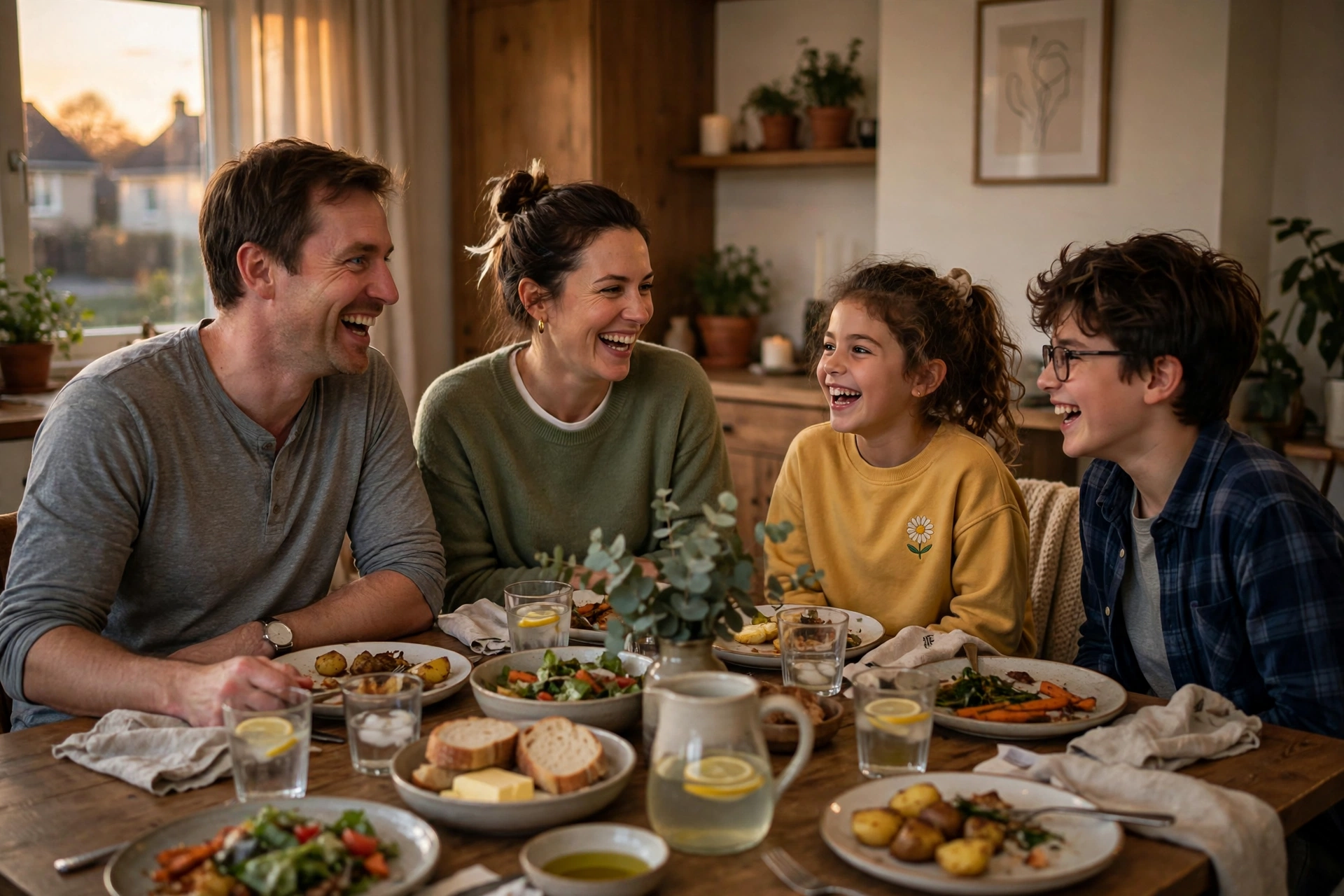
    A family sharing stories and laughter over dinner, phones set aside

    Why the question matters more than the answer

    Closed questions get closed answers. “How was school?” gets “Fine.” Open questions get stories. “What was the best part of today?” gets a sentence, and a sentence gets a follow-up, and a follow-up is a conversation.

    Researchers who filmed 98 real family car rides found that out of 851 parent questions, only 18 were open ones that asked the child to think out loud. The rest were answerable in a word or two. The fix is not more questions. It is better ones — and then waiting long enough for the answer. Count to three in your head before you say anything else. Most of the time, your child will fill the space.

    Pick one question a night. You do not need all 28. You need one that lands.

    At the dinner table

    These are for the meal itself — the first of our phone-free dinners, or the hundredth.

    1. What was the best part of your day?
    2. What was the hardest part of your day?
    3. What is something that made you laugh today?
    4. What is something kind you saw someone do today?
    5. If you could invent anything in the world, what would it be?
    6. If you could have dinner with anyone, living or not, who would it be?
    7. What are you looking forward to this week?
    8. What is something you learned today that surprised you?
    9. Tell us about a high and a low from today.
    10. What is something you are proud of this week?

    In the car

    Side by side, both looking forward, nobody having to make eye contact — the car is where the quiet questions work best. Read more in our phone-free car rides piece.

    1. What song should we play, and why that one?
    2. If you could drive anywhere right now, where would we go?
    3. What was the funniest thing that happened today?
    4. What do you wish grown-ups understood about being a kid?
    5. Tell me about a friend — what makes them a good friend?
    6. What are you curious about right now?
    7. If you could change one thing about today, what would it be?
    8. What do you think tomorrow will bring?

    At bedtime

    Short, soft, and slow — bedtime questions are for winding down, not winding up. They pair with our phone-free bedtime routine.

    1. What are you grateful for today?
    2. What are you dreaming about tonight?
    3. What made you smile today?
    4. What do you want tomorrow to hold?
    5. Tell me the beginning of a story — I will tell you the middle.
    6. What was the coziest part of today?

    For the grown-ups too

    Kids learn by watching adults, and that includes watching adults answer questions. Take a turn. Let them ask you one back.

    1. What did you love doing when you were my age?
    2. What was dinner like when you were a kid?
    3. What are you learning right now?
    4. What made you laugh today?

    How to use this list

    One question a night. Let a different person pick each night. The picker asks, everyone answers — including the adults.

    Follow the answer, not the list. If “best part of your day” turns into a ten-minute story, stay there. The list is a door, not a schedule.

    Keep it somewhere visible. Print this page, or write five favorites on a card by the table. The nights the table goes quiet are the nights the card earns its keep.

    Let the kids add their own. The best question on this list is the one your child invents. When they ask one, write it down and use it tomorrow.

    A small pause, not a punishment

    We are not anti-phone. We are pro-family moments. The goal is not to quit screens or to feel guilty about the ones already in your home. It is to protect one small moment where connection already wants to happen — and a good question is often all it takes to start it.

    If one phone-free dinner goes well, try another next week. And if you would like to be part of what comes next, join the waitlist and help shape the first phone-free ritual. Read more about why these moments matter, or start with our screen-free zones at home.
  • The Dinner Table Has Changed. One Small Pause Can Bring It Back.

    The Dinner Table Has Changed. One Small Pause Can Bring It Back.

    Food has always had a way of bringing people together. At the dinner table, families share more than a meal. They share stories, catch up on the day, and talk through whatever is on their minds.

    The scene at the table has changed, though. Everyone still sits down together, but attention often drifts from the conversation to the device in someone’s hand. If that sounds familiar, you are far from alone — and a phone-free family dinner this week is a good place to start.

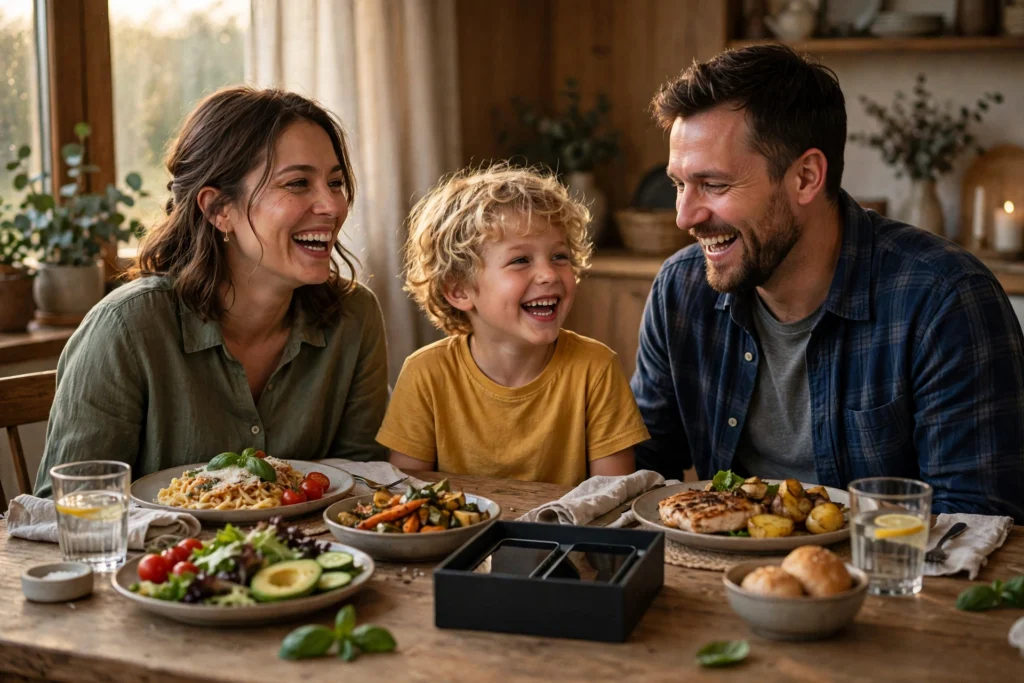
    Family laughing together at a phone-free family dinner with phones resting in a black box

    What the research found

    A 2026 study published in JAMA Pediatrics asked 357 parents of children ages 4 to 10 about their most recent family meal. The numbers were striking: 77.6% of parents and 68.7% of children had used a device during that meal. In more than two-thirds of households, parent and child were both using media at the same time.

    Parents were most often on smartphones. Children were usually watching television or a tablet. And one detail stands out: one person’s media use did not prompt the other’s. The habit is individual, not contagious — which means the fix can start with any one person at the table.

    Source: Phys.org, “Screens dominate the dinner table” (June 18, 2026), reporting on Jiawen Wu et al., “Parent and Child Media Use During Family Meals in US Households,” JAMA Pediatrics (2026). DOI: 10.1001/jamapediatrics.2026.2182.

    Why one meal matters

    For many families, dinner is the only part of the day when everyone is in the same place at the same time. It is a daily chance to connect, to stay involved in each other’s lives, and to give children the everyday guidance and attention that help them grow.

    When devices interrupt that conversation, it is children who lose out. They get less of the attention and back-and-forth that shared meals are for. None of this is about blame. Phones are useful, and modern life runs on them. But some moments deserve our full attention, and dinner is one of them.

    What the experts suggest

    The American Academy of Pediatrics recommends that families set screen-free times and places together — and the dinner table is one of the zones they name. Their guidance is deliberately balanced: there is no single magic hour limit. What matters is agreeing, as a family, on the moments that stay phone-free, and including the adults in the plan.

    That last part is the key. Children notice what adults do far more than what adults say. When parents put their own phones aside, the rule stops being a rule for kids and becomes something the whole family shares.

    Learn more: AAP / HealthyChildren — How to Make a Family Media Plan.

    Try one phone-free family dinner this week

    You do not need a new system, a lecture, or a perfect week. One meal is enough to start. Here is the simplest version:

    Agree on it together. Pick one dinner this week and decide as a family that phones wait. Let everyone, including the adults, say yes to it.

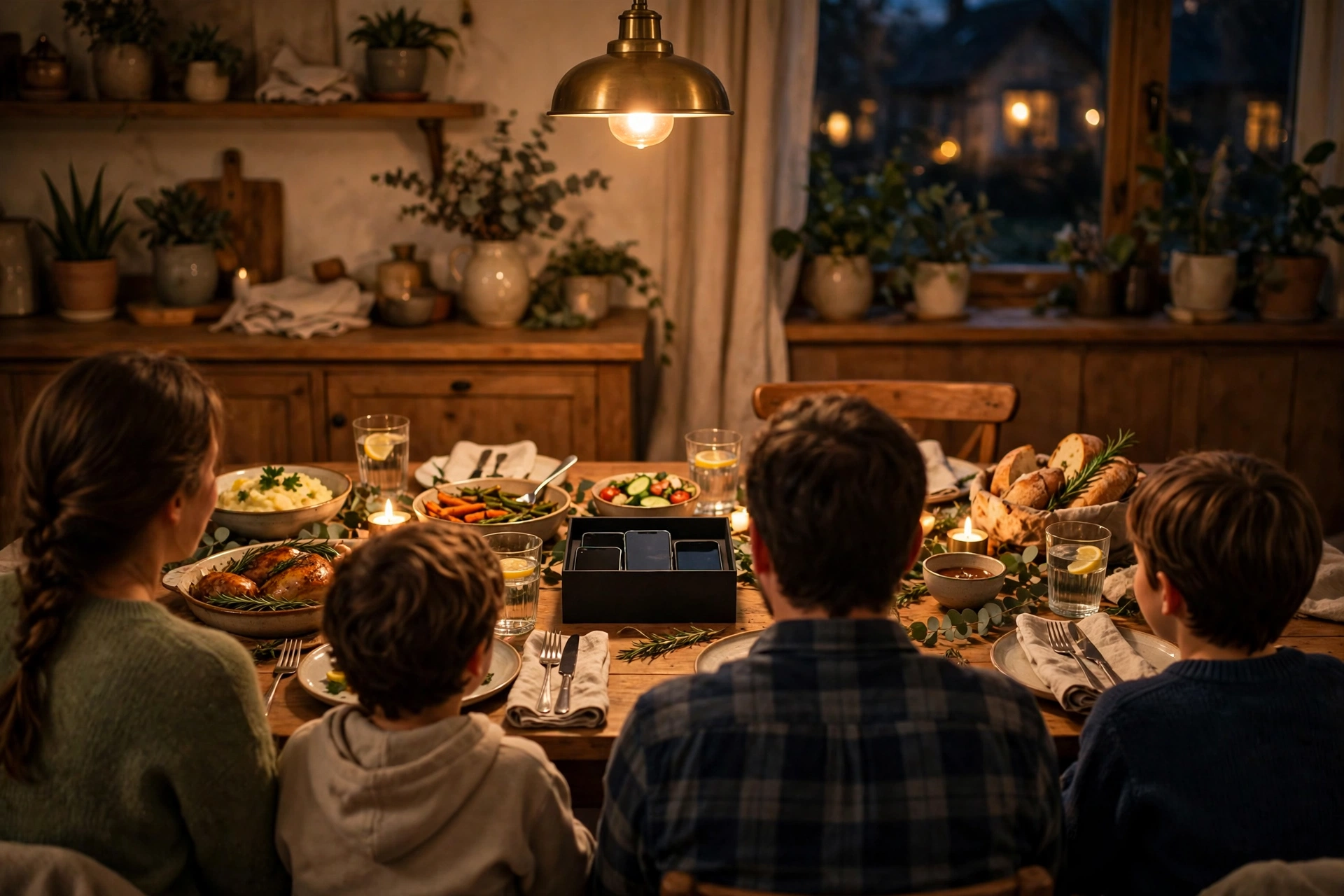
    Give phones a visible place to wait. A basket, a box, a spot on the counter. The point is not hiding them. It is a small, visible pause everyone can see.

    Start with one question. “What was the best part of your day?” is enough. The conversation does the rest.

    Notice what happens. That is the whole assignment. One meal, one question, and see how it feels.

    A small pause, not a punishment

    We are not anti-phone. We are pro-family moments. The goal is not to quit screens or to feel guilty about the ones already in your home. It is to protect one small moment where connection already wants to happen.

    If one phone-free family dinner goes well, try another next week. And if you would like to be part of what comes next, join the waitlist and help shape the first phone-free ritual. Read more about why these moments matter, or start with our manifesto.

    This article shares research and practical ideas for families. It is not medical advice. For guidance about your own family’s media use, the AAP’s family media plan resources are a good place to start.