Tag: phone-free bedtime

  • Screen-Free Zones at Home: Start With Three.

    Screen-Free Zones at Home: Start With Three.

    Most families do not need a new set of rules. They need a few places where the phone simply waits. A zone is easier than a rule, because a zone is a place, not a lecture. Everyone can see it. Everyone knows when they are in it.

    This is the hub piece for the three moments we have already written about — dinner, bedtime, and the car. Each one is a zone. Together, they are a day with room to breathe in it.
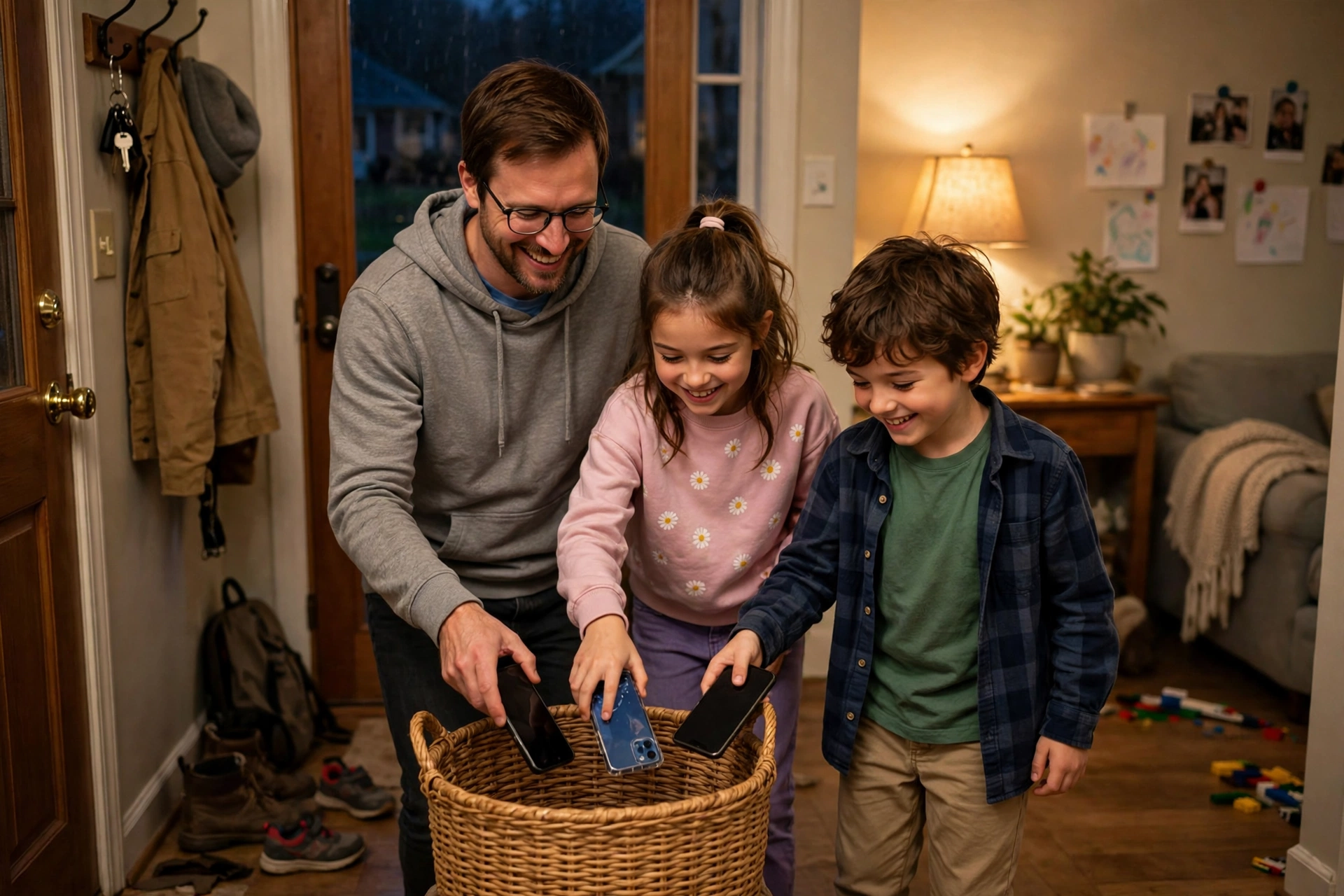
    Phones resting in a basket by the front door while the family gathers at home

    What a screen-free zone is

    A screen-free zone is a place or a time where phones rest and people get each other instead. The dinner table is a zone. The bedroom is a zone. The car is a zone. The zone is not a punishment for the phone. It is a protected space for the people in it.

    The American Academy of Pediatrics puts it the same way: agree on screen-free times and places together, as a family, and include the adults in the plan. The dinner table is one of the zones they name. The idea is not to ban screens from the house. It is to choose, on purpose, the moments that stay phone-free.

    The three zones to start with

    1. The dinner table. In a 2026 study published in JAMA Pediatrics, 77.6% of parents and 68.7% of children had used a device during their most recent family meal. Dinner is the one part of the day when everyone is in the same place at the same time — and the one most worth protecting. Read our phone-free dinner piece for the full story and one simple way to start.

    2. The bedroom. A meta-analysis of 20 studies covering 125,198 children found that using a device at bedtime was associated with about twice the odds of getting too little sleep. Even having a device in the bedroom, without using it, was linked to worse sleep. The phone does not have to be on to do its work. Our phone-free bedtime piece walks through what the research found and one story to replace the scroll.

    3. The car. Researchers who filmed 98 real family car rides found that 59% of car time was silence — and that the car, side by side with nowhere to go, is where some of the best conversations happen. Sport psychologist Katherine Tamminen calls it a “pod of privacy.” Our phone-free car rides piece explains why the car works and how to try one ride.

    Why three is enough

    Three zones cover the whole shape of a day: a meal together, a night of rest, and the time in between. You do not need a zone for every room. You need a few that everyone can remember without a chart on the fridge.

    Three is also small enough to keep. A family that holds three zones for a month has built something real. A family that tries to hold twelve zones for a week has built a list, and lists are easy to drop. Start with three. Let the rest follow if it wants to.

    How to agree on the zones together

    The zones work when everyone, including the adults, says yes to them. That is the whole secret, and it is the same one in every piece on this site. Sit down together and pick the three. Let the kids name one of them. Let the adults name one too. Write them down somewhere everyone can see — a sticky note on the fridge is enough.

    Agree on the edges as well. Does the bedroom zone start an hour before bed, or at the bedroom door? Does the car zone cover every ride, or the school run first? The answers matter less than the fact that the family chose them together. A rule handed down is a rule to break. A zone chosen together is a place to be.

    What goes in the basket

    Every zone needs a visible place for phones to wait. A basket by the front door. A box on the kitchen counter. A charging spot outside the bedrooms. The point is not hiding them. It is a small, visible pause everyone can see — and a small, visible promise that the phones will be right there when the moment is over.

    Keep it simple and keep it shared. The basket is not a punishment box. It is the family’s phone parking spot. When the adults’ phones go in first, the kids know the zone is real.

    A small pause, not a punishment

    We are not anti-phone. We are pro-family moments. The goal is not to quit screens or to feel guilty about the ones already in your home. It is to protect a few small places where connection already wants to happen.

    If three zones hold for a week, try a fourth — a walk, a Saturday morning, a game night. And if you would like to be part of what comes next, join the waitlist and help shape the first phone-free ritual. Read more about why these moments matter, or start with our manifesto.

    This article shares research and practical ideas for families. It is not medical advice. For guidance about your own family’s media use, the AAP’s family media plan resources are a good place to start.
  • Bedtime Stories, Not Bedtime Scrolling.

    Bedtime Stories, Not Bedtime Scrolling.

    The last hour of the day sets up the night. For a lot of families, that hour now ends the same way the rest of the day does — with a screen. One more video, one more scroll, one more game, and then the lights go out and everyone is expected to fall asleep on command.

    It rarely works that way. And the research on bedtime screens is some of the clearest in all the family-media literature.

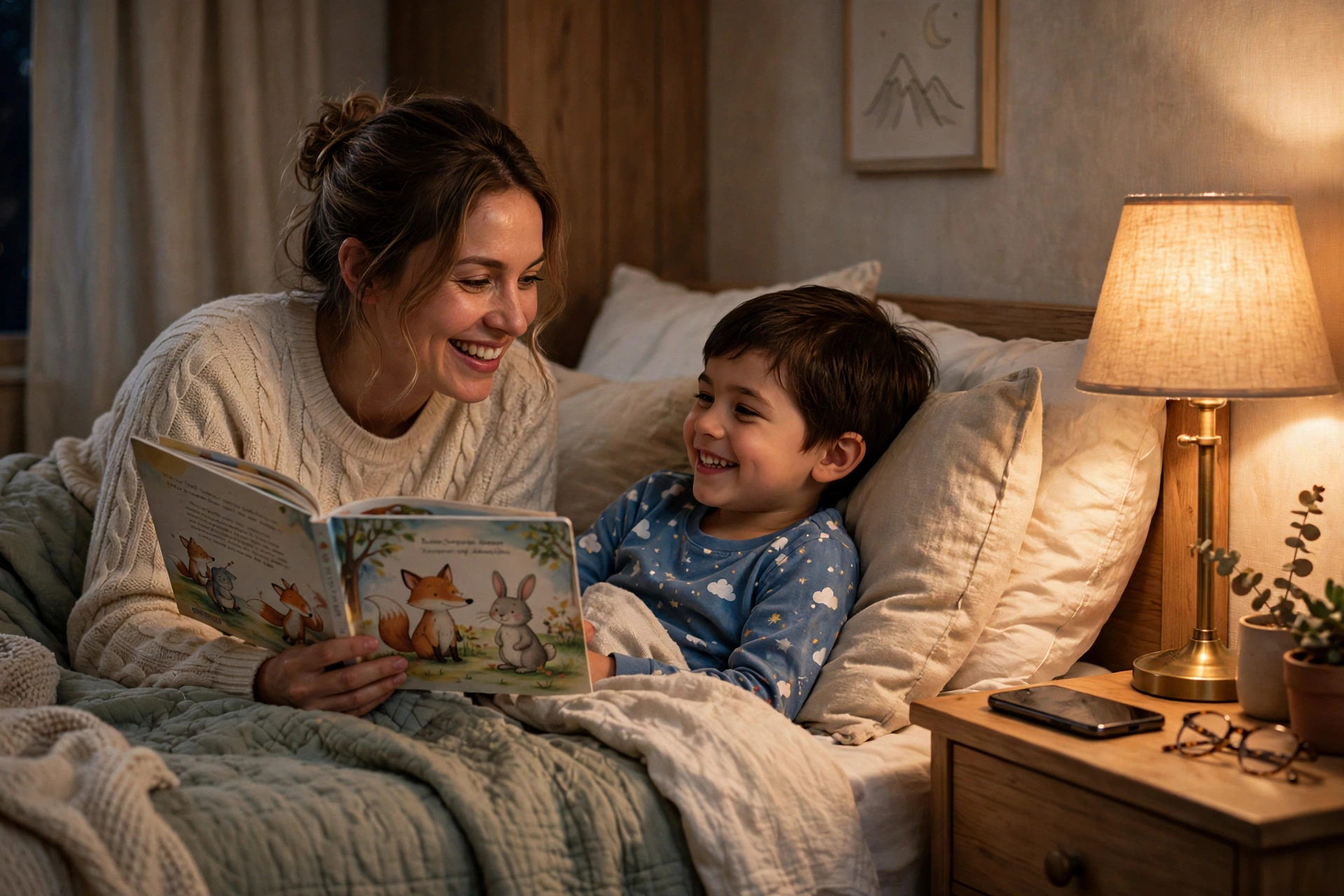
    Mother and son sharing a phone-free bedtime story, phone face-down on the nightstand

    What the research found

    A systematic review and meta-analysis published in JAMA Pediatrics pulled together 20 studies covering 125,198 children and teenagers. The finding was consistent: children who used a phone or tablet at bedtime had about twice the odds of getting too little sleep — and nearly three times the odds of feeling sleepy during the day.

    One detail is worth sitting with. Simply having a device in the bedroom, even without using it, was also linked to worse sleep. The phone does not have to be on to do its work. Its presence is enough to keep the brain on standby.

    An honest note: these studies were cross-sectional, which means they show a strong association, not proof that the phone causes the lost sleep. But the pattern held across 20 studies and more than a hundred thousand children, and it points in the same direction every time.

    Source: Carter B et al., “Association Between Portable Screen-Based Media Device Access or Use and Sleep Outcomes,” JAMA Pediatrics (2016). DOI: 10.1001/jamapediatrics.2016.2341.

    Why the last hour matters

    Screens push against sleep in three ways at once. The light tells the brain it is still daytime. The content — a game, a video, a conversation — keeps the nervous system alert long after the screen goes dark. And the time itself is displaced: an hour spent scrolling is an hour not spent asleep.

    That is why the hour before bed is the one the pediatric guidance singles out. The American Academy of Pediatrics recommends no screens in the hour before sleep, and no devices in the bedroom at all. It is not a moral judgment. It is a description of the conditions a brain needs to wind down.

    There is a gentler fact on the other side of the same research. A nightly routine itself — the same steps, in the same order, every night — is linked to better sleep in young children. The story is not just the absence of a screen. It is the presence of something better.

    What the experts suggest

    The AAP’s advice for families is deliberately simple: agree on screen-free times and places together, and include the adults in the plan. Bedtime is one of the zones they name, alongside the dinner table. Their family media plan tool walks through exactly this — pick the moments that stay phone-free, write them down together, and revisit them as kids grow.

    The part that matters most is the same as at dinner. Children notice what adults do far more than what adults say. A parent who charges their own phone outside the bedroom is not giving up anything. They are showing what the rule looks like when it applies to everyone.

    Learn more: AAP / HealthyChildren — How to Make a Family Media Plan.

    Try one phone-free bedtime this week

    You do not need a new system, a lecture, or a perfect week. One bedtime is enough to start. Here is the simplest version:

    Agree on it together. Pick one night this week and decide as a family that the last hour is phone-free. Let everyone, including the adults, say yes to it.

    Give phones a place to sleep, too. One charging spot, outside the bedrooms. The point is not hiding them. It is a small, visible pause everyone can see.

    Replace, don’t just remove. One story, read out loud. That is the whole assignment. The story is what the hour is for — the phone was only ever filling it.

    Notice what happens. That is the whole assignment. One bedtime, one story, and see how the morning feels.

    A small pause, not a punishment

    We are not anti-phone. We are pro-family moments. The goal is not to quit screens or to feel guilty about the ones already in your home. It is to protect one small moment where connection already wants to happen.

    If one phone-free bedtime goes well, try another next week. And if you would like to be part of what comes next, join the waitlist and help shape the first phone-free ritual. Read more about why these moments matter, or start with our phone-free dinner.

    This article shares research and practical ideas for families. It is not medical advice. For guidance about your own family’s media use and sleep, the AAP’s family media plan resources are a good place to start.