Tag: phone-free car rides

  • One Phone-Free Weekend: A 48-Hour Plan

    One Phone-Free Weekend: A 48-Hour Plan

    One weekend. Friday night to Sunday night. Phones wait, and the family finds out what fills the space.

    That is the whole experiment. Not a detox, not a challenge, not a test of willpower — a weekend. Forty-eight hours is long enough to feel different and short enough to say yes to. If it goes well, you will know by Sunday night. If it does not, Monday morning is right there, and nothing was lost except a weekend of scrolling.
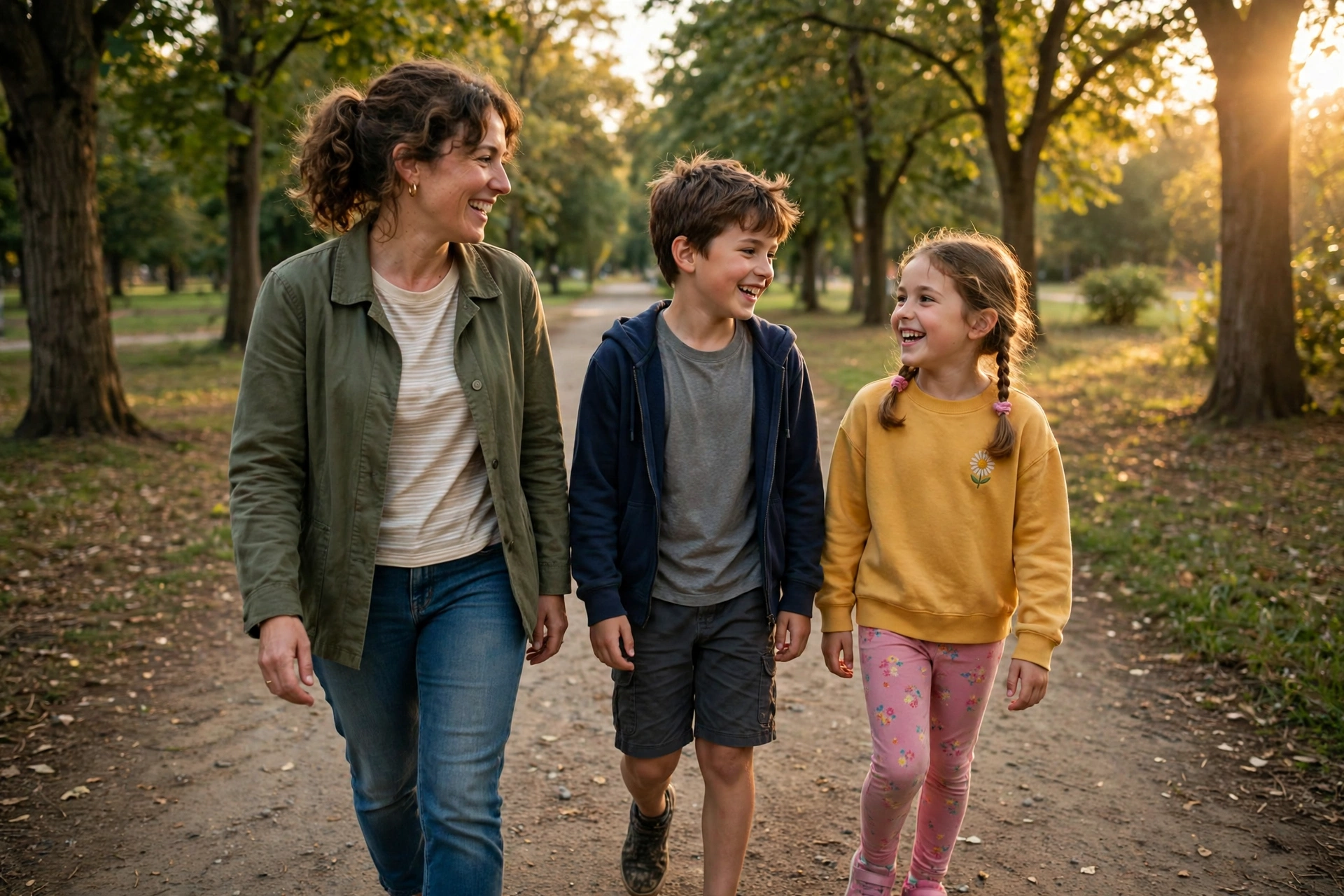
    Parents and children on a walk together, enjoying a screen-free weekend afternoon

    Why a weekend

    A single phone-free dinner is a moment. A phone-free weekend is a shape. It has a beginning, a middle, and an end, and everyone in the family can feel the shape of it. The first hours are the hardest — the hand reaches for the phone before the brain catches up. By Saturday afternoon, the reaching stops. By Sunday, most families notice something they did not expect: the time got longer. Not the hours — the moments inside them.

    A weekend also solves the problem every family experiment has: when does it end? This one ends Sunday night, after dinner. Everyone knows. Nobody has to negotiate an exit.

    Friday night: set it up together

    Agree on it over dinner. Pick the weekend together, at the table, with the phones already in the basket. Let everyone, including the adults, say yes. If someone is not ready, pick a shorter version — Saturday only. A weekend the family chose is a weekend the family keeps.

    Give the phones a place to sleep. One charging spot, outside the bedrooms. The same basket from your screen-free zones, in the same place. The point is not hiding them. It is a small, visible pause everyone can see.

    Plan one thing, not ten. One outing for Saturday, one slow thing for Sunday. The rest of the weekend can be unplanned. Overplanning a phone-free weekend just replaces the screen with a schedule.

    Tell the outside world. One message to grandparents, one to the group chat: “We are phone-free this weekend — call the house if you need us.” Then the phone can wait in peace, and so can you.

    Saturday morning: the first hours

    The first hours are the awkward ones. The hand reaches. The thumb scrolls thin air. That is normal — it is a habit, not a hunger, and habits fade fastest when something else fills the hands.

    Start with breakfast together, phones still in the basket. Then the simplest thing there is: go outside. A walk, a park, a yard. The morning does not need a plan; it needs a door. If the weather is bad, the kitchen works just as well — pancakes, a puzzle on the table, music from a speaker instead of a screen.

    By late morning, the reaching will have mostly stopped. That is when the weekend begins.

    Saturday afternoon: go somewhere

    Go somewhere that is not your house. A trail, a library, a farmers market, a friend’s backyard — anywhere the family has to be together in a place that is not built around a screen. The car ride there is part of it: phones in the seat-back pocket, one open question, and the road.

    Let the kids choose the destination. A weekend the kids chose is a weekend the kids remember. And bring a ball, a book, or a deck of cards — something for the hands that used to hold a phone.

    Saturday evening: the slow part

    Saturday evening is the heart of the weekend. Cook together, or order in and eat at the table — a phone-free dinner, with the basket in its place. Then the slow part: a board game, a story read out loud, or just the table with nowhere to be. Try one of our 28 conversation starters if the table goes quiet. “What was the best part of today?” is enough. The conversation does the rest.

    Bedtime is the same as any phone-free bedtime: one story, read out loud, phones charging outside the bedrooms. The weekend’s best moment might be this one — the house quiet, the story finished, and nobody reaching for anything.

    Sunday: bring it home

    Sunday is for the slow things the week never has room for. A long breakfast. A walk. A project on the kitchen table — the family media plan, if you have not made one yet. Sunday is a good day to write it, because by Sunday the family knows what the plan is for.

    Before dinner, sit down together and ask three questions: What was the best part of the weekend? What was the hardest part? What do we want to keep? Write the answers on the back of the media plan. That is the weekend, kept.

    Sunday dinner is the closing ceremony. Phones come back after dinner, not before. One last phone-free meal, and then the basket empties — on purpose, together, not one phone at a time in secret.

    If it gets hard

    It will get hard, somewhere around Saturday morning, when someone is bored and the phone is right there. Boredom is not a failure of the weekend. It is the weekend working. Boredom is the space where a child decides what to do next — and they can only decide that if nobody fills it first.

    If a real need comes up — a work call, a sick relative, a teenager waiting on a message that matters — take the exception. Step outside, take the call, come back. The weekend is a ritual, not a rule. The plan bends; the moment stays.

    And if the whole weekend falls apart by Saturday lunch, that is not failure either. Take one thing from it — one phone-free dinner, one walk, one story — and keep that. Next time, the weekend will be easier, because the family will know what it feels like.

    A small pause, not a punishment

    We are not anti-phone. We are pro-family moments. The goal is not to quit screens or to feel guilty about the ones already in your home. It is to protect one small stretch of time where connection already wants to happen — and to find out, together, what fills it.

    If one phone-free weekend goes well, try another next month. And if you would like to be part of what comes next, join the waitlist and help shape the first phone-free ritual. Read more about why these moments matter.
  • The Small Moments Are the Ones They Remember.

    The Small Moments Are the Ones They Remember.

    Some of the best conversations with your kids happen in the car. Not at the dinner table, where everyone is facing each other and the questions feel like an interview. In the car, side by side, both looking forward, with nowhere to go until you arrive.

    Researchers have actually studied this. And what they found is both encouraging and a little uncomfortable — because the car works, but mostly we waste it.

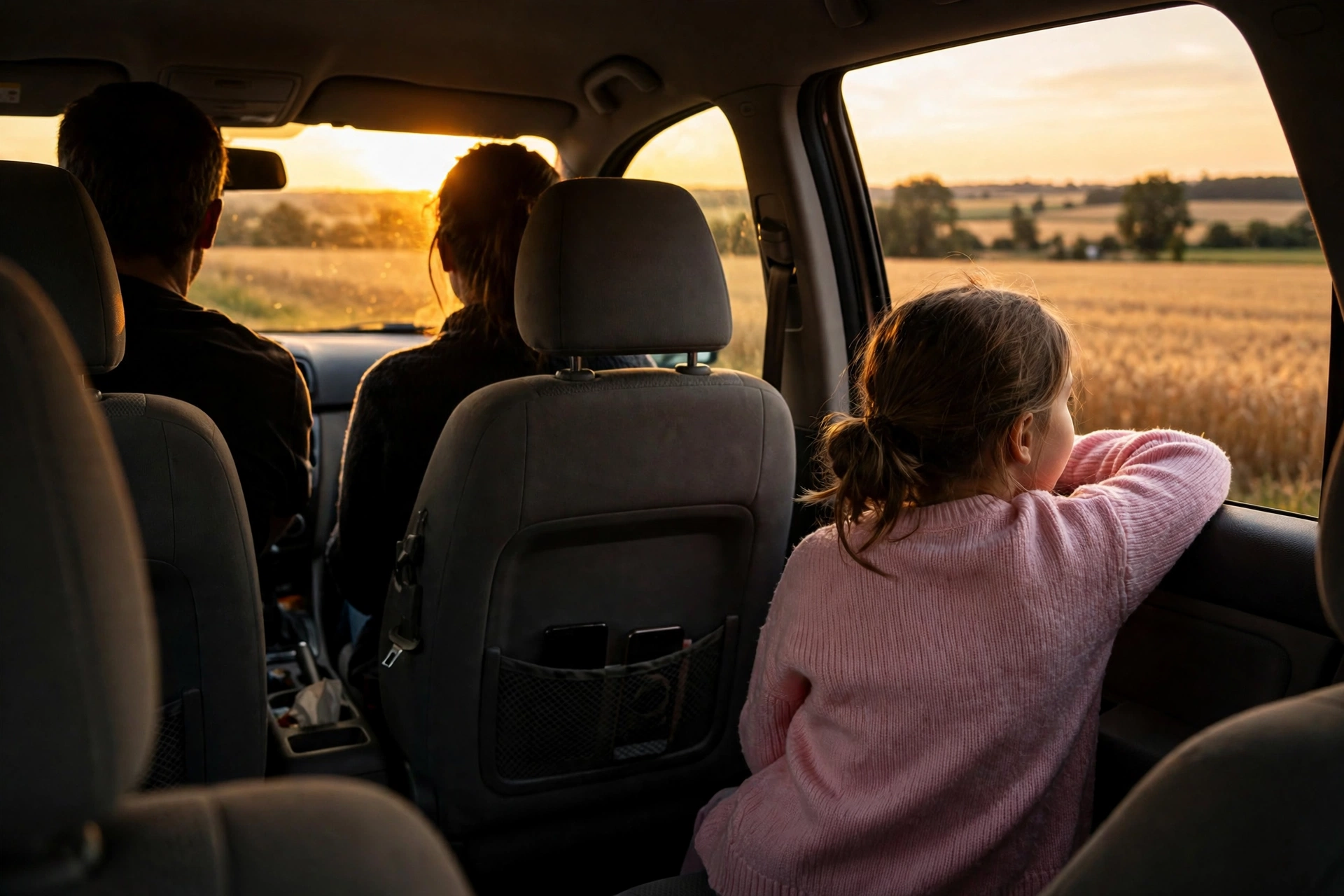
    A girl watching the sunset from the back seat on a phone-free car ride

    What the research found

    Sport psychologist Katherine Tamminen spent years studying the car ride home. Her first study, in 2017, interviewed 27 young athletes and their parents about the drive after games and practices. Then her lab went further: cameras on the windshields of 28 families, 98 real car rides, thirty hours of footage, every comment and question coded.

    The numbers are worth sitting with. Fifty-nine percent of all car time was silence. Thirteen percent was spent talking about sport. Eighty-three percent of parent questions were closed — answerable in a word or two. Out of 851 parent questions, only 18 were open ones that asked the child to think out loud. And more than half the time, when parents praised their child, they kept talking or cut in before the child could respond.

    One phrase from Tamminen explains why the car matters at all. She called it a “pod of privacy.” Two people, side by side, not face to face, nobody having to make eye contact. That setup can open up conversations a child would never have across a table.

    Two honest notes. These were families who agreed to be filmed, so they were probably on their best behavior. And the research followed young athletes and their parents, not every kind of family. But the car works the same way for anyone: the seating is the same, the silence is the same, and the ride ends when you arrive.

    Sources: Tamminen et al., 2017 (DOI: 10.1037/spy0000093); Tamminen et al., 2022 (DOI: 10.1016/j.psychsport.2021.102095). Figures as reported in “The Car Ride Home,” Coach Saltmarsh, which links both studies.

    Why the car works

    At the dinner table, a hard question lands face to face. In the car, it lands side by side, while both of you are watching the road. Nobody has to perform a reaction, and nobody has to explain why they went quiet. The gaze is already somewhere else, which is exactly what makes room for the real answer.

    The car also solves the problem every hard conversation has: how long will this run, and how does it end? In the car, everyone already knows. The conversation ends when you arrive. Nobody has to negotiate an exit, and nobody is trapped at the table waiting for it to be over.

    And a quiet car is normal. Nearly six in ten minutes in those filmed rides were silence. Silence in the car is not a failed ride. It is the space where a child decides whether to talk — and they can only decide that if nobody fills it first.

    What gets in the way

    The same research shows how the ride goes wrong, and phones are usually in the middle of it. Headphones go in. Eyes go to the window. Some of the young athletes in the study admitted they pretended to fall asleep to avoid talking about the game — taking control of a conversation they did not want.

    Parents do their version of the same thing. A call on speaker. A quick check at a red light. A playlist that fills every gap so the silence never gets a chance. The car is a small room, and a phone in it takes up more space than it looks like it should.

    None of this is about blame. The ride is the one place in the day where nobody can leave the room, which is exactly why it deserves the same small pause as the dinner table and the bedtime story.

    Try one phone-free car ride this week

    You do not need a new system, a lecture, or a perfect week. One ride is enough to start. Here is the simplest version:

    Agree on it together. Pick one regular ride this week — school pickup, practice, the grocery run — and decide as a family that phones wait. Let everyone, including the adults, say yes to it.

    Give phones a visible place to wait. The seat-back pocket works. The point is not hiding them. It is a small, visible pause everyone can see.

    Ask one open question, then wait. Not “How was school?” — that gets one word. Try “What was the best part of today?” or “What was the toughest part?” Then count to three in your head before you say anything else. Most of the time, your child will fill the space.

    Notice what happens. That is the whole assignment. One ride, one question, and see how it feels.

    A small pause, not a punishment

    We are not anti-phone. We are pro-family moments. The goal is not to quit screens or to feel guilty about the ones already in your home. It is to protect one small moment where connection already wants to happen.

    If one phone-free car ride goes well, try another next week. And if you would like to be part of what comes next, join the waitlist and help shape the first phone-free ritual. Read more about why these moments matter, or start with our phone-free dinner and phone-free bedtime.

    This article shares research and practical ideas for families. It is not medical advice. For guidance about your own family’s media use, the AAP’s family media plan resources are a good place to start.