
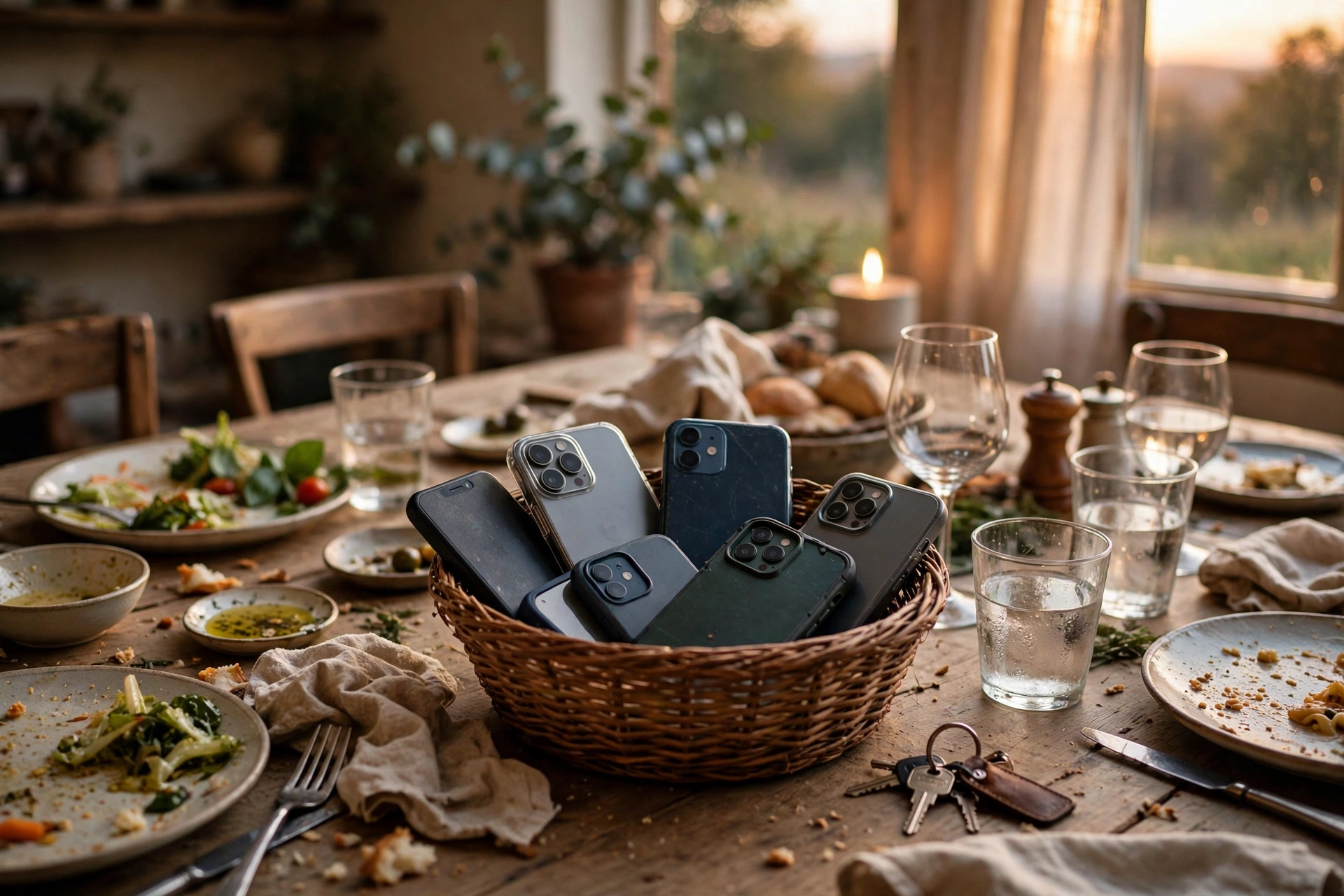
Every family that tries phone-free dinners hits the same question within about a minute: where do the phones go? A phone basket dinner is the simplest version of that ritual: every phone goes in the basket, and dinner belongs to the people at the table.
Not in a pocket. Not face-down on the table, buzzing against the wood. Not in another room, where someone will “just check” on the way to the bathroom. They need a place — a visible place, in the room, where everyone can see them waiting.
That place is a basket. Any basket. And it is the whole trick.
Why a phone basket dinner works
The basket works because it is honest. The phones are not confiscated — they are waiting, in the open, where everyone can see them. A phone hidden away feels like a punishment. A phone in a basket on the table feels like a decision the whole family made, because it is one.
It also works because it applies to everyone. The basket does not care who earns the money or who makes the rules. The adults’ phones go in first, in front of the children, or the basket is just a chore with a nicer name. That is the same visible pause we use in our screen-free zones at home: the pause everyone can see.
Picking your basket
Anything that holds phones and looks like it belongs on the table: a wicker basket, a wooden bowl, a cloth box, a bread basket doing double duty. Put it where dinner happens — the middle of the table, or by the door on the way in. Two rules: it has to be big enough for every phone in the house, and it has to stay in the same place, so nobody has to think about it.
Do not buy anything for this. The basket you already own is the right basket. The moment you turn it into a purchase, it stops being a ritual and starts being a product.
The first night
Do not announce it as a rule. Announce it as an experiment: “Tonight, let’s try something. Phones in the basket, dinner together, see how it feels.” One night. If it goes well, try another. If it goes badly — complaints, a forgotten phone, someone sneaking a glance — laugh about it and try again tomorrow. A ritual is not a streak.
One job for the first night: ask one good question at the table. Our dinner conversation starters are built for exactly this — the basket makes the space, the question fills it.
What about work calls and emergencies?
Emergencies, always. That is the rule, and it is not negotiable — a phone that might ring about a sick relative or a work emergency does not go in the basket, or it goes in face-up with the sound on. Say so out loud, once, so nobody has to wonder. The basket is for the scroll, not the call that matters.
For the parent who is genuinely on call: put the phone in the basket face-up, ringer on, and tell the table. Everyone understands a real exception. What nobody understands is a “quick check” that lasts twenty minutes.
When the kids push back
Older kids will test it. That is their job. Two things help. First, the adults go first — every night, without exception, or the basket is a lecture. Second, let them own part of it: they pick the basket, they pick the question, they call the phones in. A rule a teenager helped make is a rule a teenager will keep, at least most nights.
A small pause, not a punishment
We are not anti-phone. We are pro-family moments. The goal is not to quit screens or to feel guilty about the ones already in your home. It is to protect one small moment where connection already wants to happen.
If one basket night goes well, try another tomorrow. And if you would like to be part of what comes next, join the waitlist and help shape the first phone-free ritual. Read more about phone-free dinner, or start with our family media plan and one phone-free weekend.
This article shares research and practical ideas for families. It is not medical advice. For guidance about your own family’s media use, the AAP’s family media plan resources are a good place to start.